
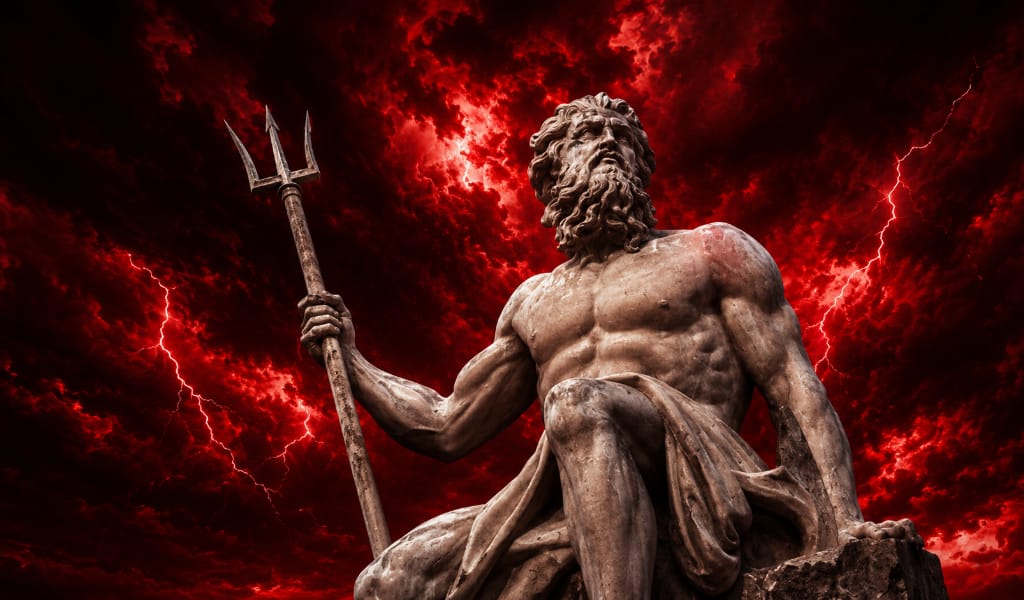
Question:
“If there are so many gods, why should I believe in yours?”
Ω
Hello Team,
Now, this is a good question, and, in fact, you may have heard a similar question to this by the famous actor, writer, comedian and atheist, Ricky Gervais.
TLDR: Just because there are thousands of false gods, that does not mean there cannot be one true God.
You reject 2,999 Gods, I reject one more.
On the Colbert show a few years ago, Ricky Gervais said this: “There have been thousands of gods throughout history. You reject 2,999 gods. I just reject one more.”
On the surface, this is a clever argument. This is classic Ricky, and classic atheism. The argument around many gods sounds plausible, and will, no doubt, convince many people that believing in one god out of the many, is ridiculous.
And what makes Ricky even more effective when he poses such a question, is that he is, honestly, very funny with it. That is why it works. That is why people listen to him.
Do You Choose a Peanut Butter Jesus?
“You reject 2,999 gods. I just reject one more” makes Christianity sound like our God is just one more random religious choice. A bit like choosing one cookie from a thousand others offered in a spiritual supermarket.
Do I choose a crunchy Zeus? Or a gooey Thor? Chocolate Buddha? No, maybe creamy Vishnu. Or wait, this one looks tasty. I’ll take peanut butter Jesus, thank you very much.
You just add your favorite cookie to your basket and head to the checkout.
You scan the code and beep, beep. There you are. You just bought yourself a belief in your chosen god.
And the atheist thinks it’s that simple and that silly.

Just Pick One Ferrari?
It makes the argument sounds powerful because it puts the Christian and the atheist almost in the same category. We are both rejecting almost every god out there. Except, the atheist is just rejecting one more. Which is no big deal, right? It’s only one more rejection from the many.
But there is a problem with this argument.
It would only work if all “gods” were basically the same kind of thing. It would be like saying every god is a Ferrari, and Christians simply picked one Ferrari instead of the other 2,999 Ferraris.
But that is not what Christianity claims and this is why YHWH, the God of the Bible, is different.

The Gods of Mythology
The gods of mythology were often seen as powerful beings living and acting inside the universe. Humans gave them a function. They typically represented some aspect of life: the god of fertility, the god of war, the god of thunder. This is why you needed so many of them. They all did something specific.
But the Christian God is not one more powerful being inside the universe, doing a job. He is not one more Ferrari among many. He is the eternal Creator of the universe itself.
So, Christianity is not choosing a sports car in a showroom. It is saying the whole showroom, all the cars, the road, the engine, and the driver only exist because there is one eternal Creator behind all reality.
We are not simply rejecting 2,999 gods and then claiming the last one standing. Christianity is making a completely different kind of claim: that there is one true Creator God, and everything else depends on Him.
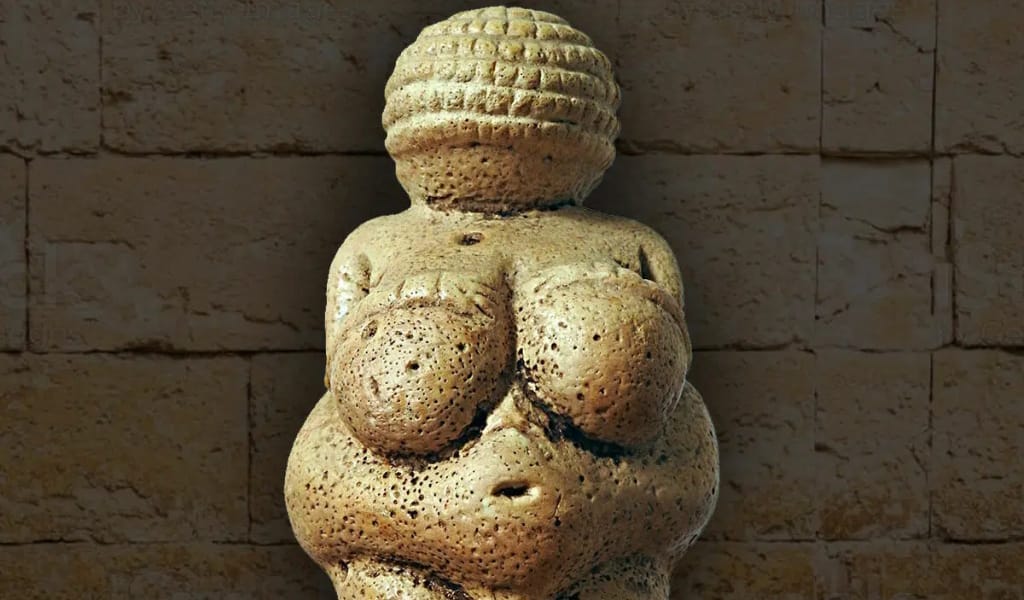
Not All Gods Are the same kind of Claim
When people talk about “thousands of gods,” they often treat every religious belief as though it belongs in the same box.
But that’s too simplistic.
Belief in Zeus is not the same kind of claim as belief in the God of Christianity.
Zeus, the Greek king of the gods, was thought of as one powerful being among other powerful beings. He had a beginning. He was born. He behaved immorally with human women. He had rivals. He could be tricked. He was fallible.
But most of all, he was part of the universe, not the Creator of it.
These gods were made in man’s image, not the other way around.
Christianity is not saying: “Out of all the gods people have invented, ours is the right one.”
No! We’re saying there is only one.
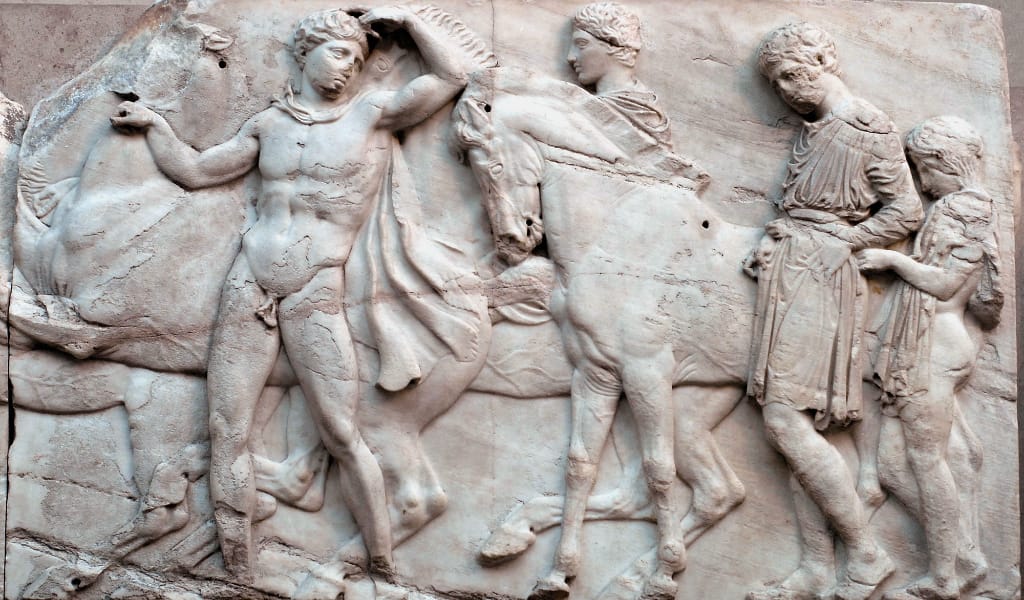
Do Thousands of Gods Debunk Christianity?
So, in the end, the real question we’re answering is this: do thousands of false claims about gods disprove the possibility of a true God?
Well, let’s play with that idea and change the category.
- Just because there have been many false medicines throughout history, that does not mean medicine is false.
- Just because people have told thousands of lies throughout history, that does not mean truth does not exist.
- And if we had thousands of dollars of counterfeit money in our pockets, that would not mean real money is impossible.
So why would the existence of many false gods prove there is no one true God?
It doesn’t.
At most, it shows that humanity is, at its core, deeply religious. Across cultures, through millennia, through the rise and fall of civilizations, people have looked at the world and sensed that there is something beyond us.
The Christian can agree with that.
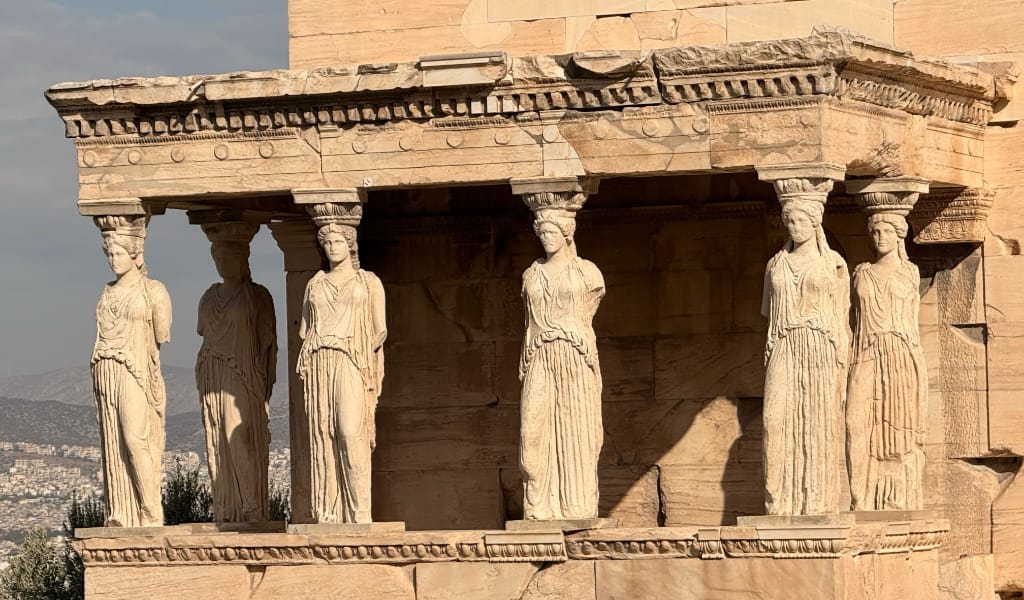
Paul Faced the same problem in Athens
Even the Bible writes about this very subject.
In Acts 17, Paul is in Athens, a city full of idols and religious images.
He is surrounded by many of Ricky’s thousands of gods.
But Paul doesn’t say, “Well, because there are so many gods here, I guess religious belief must be nonsense.”
No! Instead, he says:
“Men of Athens, I observe that you are very religious in all respects.” Acts 17:22, LSB
Paul notices that such a collection of gods, means they are searching for the divine. They are spiritually aware. They know there is something beyond themselves—As all people do if they are honest.
But then Paul points to an altar with the inscription, “TO AN UNKNOWN GOD” (Acts 17:23, LSB). And then he tells them:
“The God who made the world and all things in it, since He is Lord of heaven and earth, does not dwell in temples made with hands; nor is He served by human hands, as though He needed anything, since He Himself gives to all people life and breath and all things.” Acts 17:24–25, LSB
That is an important distinction.
At some point, the conversation has to move beyond counting gods
The real question is not: “Why believe in one more god?”
The real question is: “Which view of God best explains reality?”
Which view best explains why anything exists at all?
Which view best explains morality?
Human dignity?
Our longing for meaning, justice, love, and hope?
Christianity does not begin with a vague idea of “a god somewhere.”
Christianity is centered on one God who made the world and has revealed Himself in Jesus Christ.
That means God is not merely an explanation for existence. He is personal, knowable, and has stepped into history.
That changes the conversation.
Final Thoughts
Yes, we may reject 2,999 other gods.
Not because Christians picked one more god from a list.
But because Christians believe the God behind all reality has stepped into history and said:
“Here I am.”
That is not one more god.
That is the God from whom all reality begins.
Scripture Verse—Legacy Standard Bible translation:
Acts 17:22 LSB
Acts 17:23 LSB
Acts 17:24–25 LSB